Routine cuts and seasonal yard work
From the first stripe to the last clean edge.
Set up a weekly cut, freshen the beds, or make a plan for a compacted lawn. The example service menu follows the way a small York County route would work through the year.
What goes into a visit
Weekly mowing
Mow the open lawn and trim around fence posts, trees and gate openings. A regular route keeps cuts small. If a yard has grown out after a missed week, bring it down in stages to take off at most one-third of the blade in a cut.
Edging and blow-off
Cut a clean edge along paved walks and driveways. Trim along bed lines and blow loose clippings off the steps, patio and other hard surfaces. Fine clippings can stay on the turf where they break down.
Mulch and pine straw
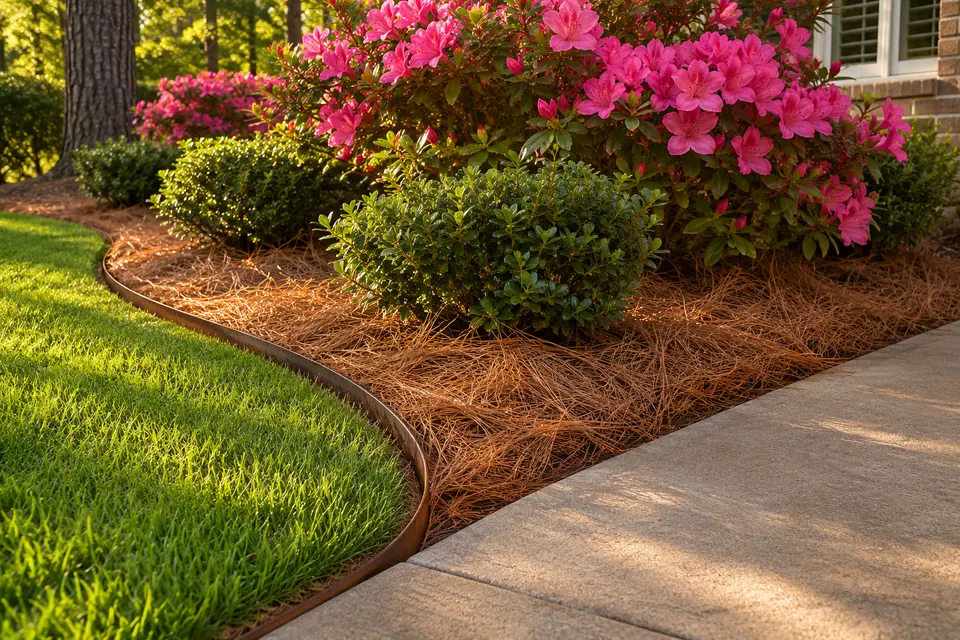
Clear loose debris, tidy the bed line and refresh the surface with bark mulch or pine straw. Work around plant crowns and keep material pulled back from tree trunks. Quote material and coverage by bed size and access.
Leaf cleanup
Lift heavy leaf cover off the lawn, steps and drainage paths. Choose a cleanup between heavy drops or a final pass once most leaves are down. Include debris volume and disposal in the quote.
Core aeration and overseeding
Pull plugs where traffic or clay soil has packed the ground. Aerate actively growing Bermuda and zoysia in late spring or summer. Plan tall fescue aeration for fall and overseed thin fescue in September or early October as the weather cools.
Cut height follows the season
Clemson Extension lists roughly 1–2 inches for common bermudagrass. Many zoysia lawns are cut around 1½ inches, with more height in partial shade. Tall fescue may be cut around 3 inches in spring and 3½ inches in summer. Turf variety, equipment, heat and how much the grass has grown all shape the final setting. Warm-season lawns slow as temperatures drop. Fescue usually grows most actively in cooler weather.